
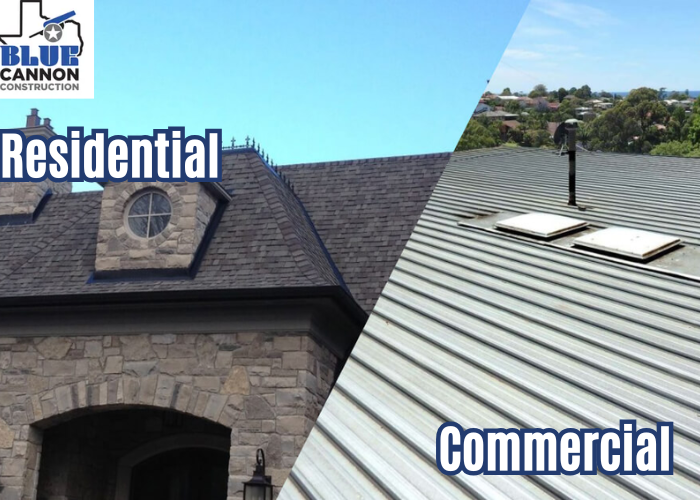
The key differences between commercial vs residential roofing are in terms of materials, design and construction, installation and maintenance requirements, costs and energy-efficiency. Each type performs differently in various weather conditions and offers unique upkeep challenges that can impact its performance and longevity. Understanding these differences helps property owners to plan routine maintenance and repairs, influence their longevity and protect their investment.
What Sets Apart Residential and Commercial Roofing?
Just because both residential and commercial roofs have the same function does not mean that they require the same handling and maintenance. Whether you want a new roof for your home or are looking for energy-efficient commercial roofing options for your business, understanding the key differences helps you make better decisions and maximise financial advantages. If you are searching for residential vs commercial roofing, read our guide below and protect your investment.
| Fast FactResidential roofing holds 59.12% of the US roofing market share, while commercial roofing is projected to expand at a 7.12% CAGR through 2031. |
Here is your guide to understanding the key differences between residential and commercial roofing.
Roofing Materials
Asphalt shingles dominate 70% of US residential roofing, and are composed of fiberglass coated with asphalt and embedded with ceramic granules.
Steel and concrete form the commercial structural deck. Smaller structures like shops have pitched metal roofs which offer better energy efficiency, ventilation, and soundproofing.
Design and Slope
Large commercial roofs are typically low-sloped or flat and require an efficient drainage system to prevent water pooling. Residential roofs are sloped to shed snow, hail, rain and debris.
Flat and low-sloped roofs captured 56.25% of the market share in 2025, and are advancing at a 7.74% CAGR through 2031.
Construction
The simple construction of residential roofing consists of plywood attached to timbers, forming the decking, with a protective underlayment before installing materials on top. Commercial roofing consists of several layers, like deck, vapor barrier, insulation, roof membrane and coatings.
Large commercial roofs on businesses, retail buildings, warehouses and factories are flat. Roofing membrane is the primary defence against UV damage and water infiltration on flat commercial roofs. Protective coatings like acrylic and silicone are waterproof and extend roof life.
OSHA requires all commercial roofs to have walkpads to protect from heavy foot-traffic, safety railings, anchors and necessary safety measures in place.
Installation
Residential roofs can be easily installed, within 1 to 3 days, depending on materials and design. Commercial roof installation is challenging as it covers larger areas, consists of several layers, and involves the team effort of multiple contractors
| Important factWell-designed buildings can reduce energy consumption by up to 40-50%. |
Maintenance Requirements
Commercial roofing requires more upkeep and maintenance because they have to handle the weight of larger HVAC systems, satellite dishes, solar panels and smokestacks. All this equipment must be properly supported and flashed to prevent localized roof failure and warranty voids.
Residential roofs fare well with regular seasonal maintenance and annual inspections.
Repair Costs
Repairing a residential roof is not a complex task and the majority of homeowners perform minor shingle repairs themselves, saving on costs. Any ignored small damage to a commercial roof can lead to costly repairs involving large sections of the structure.
Energy Efficiency
Residential insulations include spray foam, fiberglass batts, rigid foam board, and reflective barriers.
The common insulation being used in commercial buildings includes
Polyisocyanurate (R-value 6-6.5)
Extruded polystyrene (R-value 5)
Expanded polystyrene (R-value 3.6-4.2)
| Flat roofing membrane options includeBUR (built-up roofing)It consists of multiple layers of asphalt and insulation, vapor retardant, and surfacing material. Modified BitumenIt combines asphalt membranes with polymerized rubber or plastic and is reinforced with fibreglass, creating a sturdy and flexible roofing material. Single-Ply Membranes such as EPDM and TPOEthylene Propylene Diene Monomer (EPDM) is a synthetic rubber material ideal for warehouses, widely used in the roofing and construction industry.Thermoplastic Polyolefin (TPO) is a single-ply roofing membrane and a cost-effective option. Heat-welded seams offer superior strength and are ideal for office buildings. PVCA chemical-resistant and durable membrane can last for up to 30 years and is ideal for restaurants and factories. |
Conclusion
Understanding the key differences between residential vs commercial roofing helps property owners make informed decisions about their investment. Both types have their unique features and advantages and offer distinct maintenance challenges. Scheduling regular professional maintenance inspections can extend the life of your roof and enhance energy efficiency and indoor air quality.
FAQs
What is the average useful life of a commercial roofing system?
The average useful life of a commercial roofing system is usually between 15 and 30 years, depending on materials and maintenance.
What are the main roof styles?
The main roofing styles include gable, hip, flat, dutch, mansard, shed, butterfly and gambrel.
Which roof is more durable, EPDM or TPO?
If you prioritize energy efficiency and aesthetics, choose TPO. Consider EPDM if you want a more durable, flat roof that can last for decades.